Walk the loop around Swan Lake Park on any weekday morning and you will see the same cast of regulars: a woman circling the water on her lunch break, a retiree with a coffee cup watching the birds, a couple of dogs pulling their owners toward the fountain that finally, after a quarter century, has something coming out of it. What most of them will tell you, if you ask, is that the fountain is the news. What actually happened here is a little stranger than that.
The fountain came back because the city spent $2.2 million to rebuild it. The swans came back because nobody official promised they would.
The Fountain's Restoration
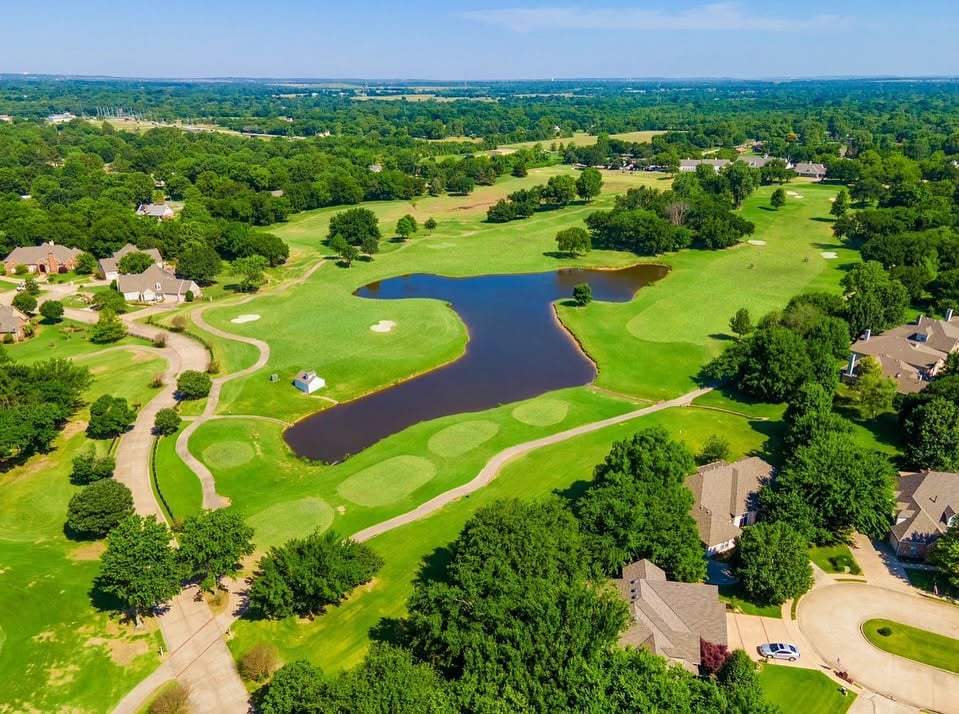
Swan Lake's central fountain dates to the Depression, a WPA-era rebuild of a lake that started as a cattle rancher's watering hole before it became one of Tulsa's first suburban developments. By 2001, the crumbling concrete was considered too far gone to save, according to KJRH. It stayed dry for close to a quarter century, the same stretch of nearly 25 years that Tulsa officials would later cite when the water finally moved again, a landmark residents walked past without ever seeing it do the one thing it was built to do.
Money finally came through two rounds of the city's Improve Our Tulsa bond program, and construction started in March 2024. Even then, the plan was modest in scope. Crews needed to drain sections of the lake, shore up a ten-foot coffer dam, and relocate fish before they could touch the fountain itself. As of June 2024, the answer to whether the neighborhood's famous swans were coming back was a flat no. There were no plans to reintroduce them, according to NewsOn6's coverage of the groundbreaking.
By November 2024, the fountain was running. Mayor G.T. Bynum and District 4 Councilor Laura Bellis cut the ribbon at a ceremony the City of Tulsa's press office covered in detail, with the final project split between $1.7 million from the IOT2 measure and $500,000 from IOT3.
"It's great, the neighborhood has worked towards this for years and years."
NewsOn6 quoted Dick Sherry, a longtime resident whose family has photographs at the lake going back to the 1920s, describing the moment the water finally moved again.
What $100,000 Actually Bought
Here's the part of the story that tells you more about this neighborhood than the fountain itself. Long before the city's bond money arrived, Swan Lake residents tried to fix the problem themselves. They raised roughly $100,000, believing that would cover a basic restoration. It didn't come close. Once contractors got a real look at the underlying damage, the estimate climbed to somewhere between $2 million and $3 million, a gap neighbors weren't prepared for, according to a January 2026 account from TCC Connection that interviewed residents Tracy Hull and Jarrett Keck.
The city's Improve Our Tulsa money covered the difference. But the neighborhood's original $100,000 didn't just disappear into the larger budget. It went toward a new perimeter fence around the lake, a smaller, more contained project that residents could see through to completion on their own terms. It's a useful detail if you've ever wondered what a hundred grand actually buys in a public infrastructure project this size: not a fountain, but a fence, and the water quality upgrades the city added on top included two underwater aerators designed to cut down on algae blooms and keep oxygen levels up for whatever wildlife the pond attracted next.
What actually changed at Swan Lake Park between 2024 and today:
- The central fountain, dry since roughly 2000, runs again
- Two underwater aerators were added to improve water quality
- A new fence went in, funded in part by resident fundraising
- The walking path around the lake has been renewed alongside the rest of the work
The Swans Nobody Promised
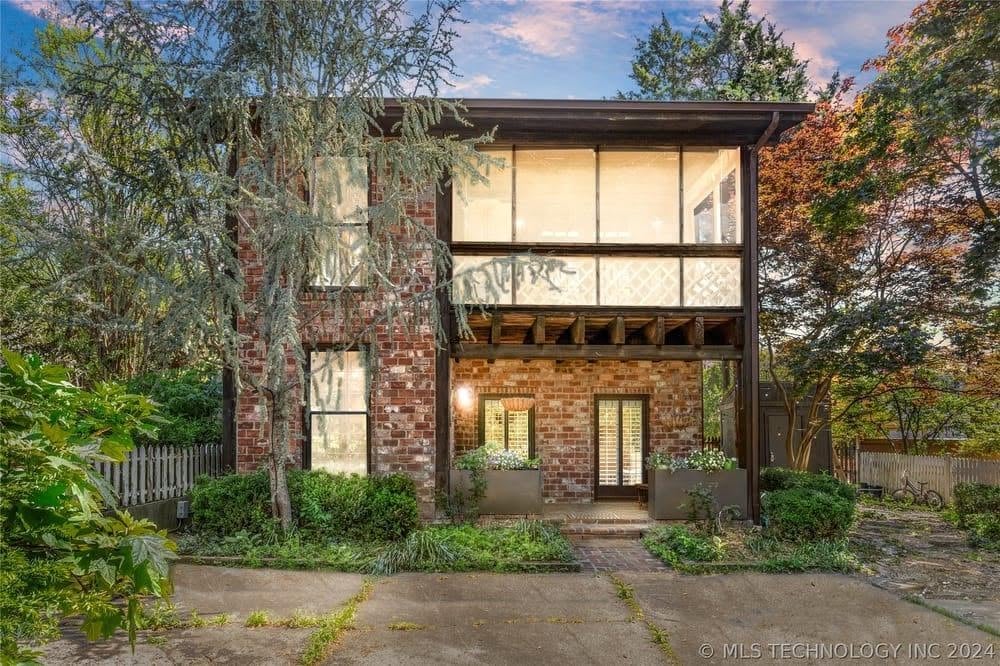
Sometime after that November 2024 ribbon-cutting, actual trumpeter swans returned to the water. Not the concrete or wire versions the neighborhood has used as its decorative motif since architect Joseph Koberling built a swan into the facade of his own house on South Swan Drive in 1944. Real birds, on a lake that city staff had said, on the record, they had no plan to restock.
By November 2025, the swans had names. Tulsa officials and neighborhood advocates called them Gus and Annie, a direct tribute to Samuel Augustus "Gus" Orcutt, the rancher whose family's stock pond became the lake, and his wife Annie Hodge, a Creek woman he married in 1890. NewsOn6 covered the naming, describing a pair that moves in unison around the water, dipping their heads together in a way that reads as deliberate as it is graceful.
The official record does not explain exactly how the city went from no plans to Gus and Annie in about a year. The fountain restoration, meanwhile, was a bond-funded infrastructure job with a start date, a budget line, and a ribbon-cutting. The Swan Lake Waterfowl Society still handles feeding and habitat upkeep in partnership with Tulsa Parks, the same quiet, unglamorous work that's kept this pond functioning as a real ecosystem rather than a decorative water feature for a century.
What Fall Actually Looks Like Around the Water
None of this is news if you already live within walking distance of Cherry Street and check the park most days. But it's worth having the full sequence in one place, because the neighborhood's calendar hasn't changed even while the water has: a September block party brings out the same families who've been coming for years, October means a Halloween parade and costume contest that turns the walking path into a kids' runway, and by the time the days get short, the trees along Swan Drive go up in lights for the annual "Lights on Swan Lake" evening, a tradition the American Planning Association noted when it named Swan Lake one of its Top Ten Great Neighborhoods in 2011, an honor tied directly to how much community programming happens here year after year, as documented on the APA's own profile of the district.
None of that requires the fountain or the swans to work. The block party happened during the years the water sat still. But there's something about walking into this fall with the fountain running and two named birds gliding past the bronze swan sculpture at the park entrance that makes the whole loop feel finished in a way it hasn't in 25 years. The 1927 Gothic Revival tower at Christ the King Church still anchors the skyline a few blocks over. Woodward Park and its Rose Garden still sit at the southwest edge for anyone who wants to extend the walk. Cherry Street's regular farmers market is still a five-minute stroll away. The only thing that's different is that the postcard version of this neighborhood, the one with water moving and swans on it, is no longer just a photo from the 1920s Tulsa Historical Society archive. It's what's actually there when you go look.
The fountain restoration was funded through bond measures, while residents' fundraising went toward a new perimeter fence. The swans returned on their own timeline.
If you're the kind of person who already plans your evenings around this park, you already knew most of this in pieces. Now you have it in order.
If you're thinking about what it actually takes to live inside a neighborhood with this kind of institutional memory, Linda Smalley has spent years working the streets around Cherry Street, Utica Square, and Midtown's older, quieter blocks like Swan Lake. Let's Connect if you want a conversation grounded in what this part of Tulsa actually is, not just what the listing photos show.